Written by Isaiah Banda
A season of Renewal
With the arrival of the first rains, it’s been wonderful to watch the bush begin its transformation with fresh shoots emerging and the landscape slowly coming back to life, including vibrant bird activity, a curious jackal, and a stunning spring sunrise.
After months of dust and drought, the first rain finally arrived and cleaned off the dust with over 15mm of rain, and with it, a sense of deep relief spread across Mabula’s landscape. This rain is more than just water soaking into thirsty soil, it is a signal. The bush is stirring once again. Spring has arrived, and the natural rhythm of life begins to shift.
The air is fresh, the days are warmer, and a green flush is beginning to blanket the reserve. Life responds almost instantly, new shoots push through the soft earth, insects hum in abundance, and the scent of wet acacia drifts through the air after each shower.
Above us, the sky tells its own story of renewal. It becomes animated with movement as our migratory visitors return from their journeys north. The first Black Chested Snake Eagles have already been sighted, circling gracefully on rising thermals as they reclaim the same nesting sites they have used for generations.
Not far behind, the unmistakable our permanent resident Lilac Breasted Roller perching on a tree elegantly across the sky, announcing the return of their counterparts’ territories.
Each call, each flutter of wings, each drop of rain marks the start of a new chapter in the Mabula Game Reserve, a reminder that nature, in her perfect timing, always finds her rhythm again.


At Ngulubi Dam, the hippos seem to be celebrating the rising water levels that have remained high since the end of winter. The good rainy season has kept the dam full and vibrant, with the dams overflowing through much of the cooler months.
Each morning, the mist gently lifts off the surface of the water, revealing the round, glistening backs of hippos emerging like small islands. The deep grunts and snorts echo across the valley, a familiar chorus that reminds us how alive this corner of the reserve truly is.
The hippos have been especially active and playful lately. Guests have enjoyed watching them splash around, submerging and resurfacing with loud sprays of water, as if performing a joyful dance. Their playful behavior often includes mock chases and gentle nudges, moments that seem lighthearted but also strengthen social bonds within the pod.
The sight of young calves nestled close to their mothers adds warmth to the scene, their small heads occasionally bobbing up beside the adults for a quick breath of air before diving under again. One of the most captivating moments to witness is a hippo’s yawn.
When a massive bull lifts his head high and opens his mouth wide, revealing his enormous tusks, it can be both amusing and awe-inspiring. Though it looks like a sleepy gesture, a hippo’s yawn is actually a powerful display of dominance, a reminder of who rules the waters. Yet, when several hippos yawn together in what seems like slow motion, it becomes a mesmerizing and almost comical spectacle that never fails to delight onlookers.
As the sun sets over Ngulubi Dam, the hippos settle down, their rounded silhouettes rippling gently in the golden water. Crocodiles bask lazily on the sun-warmed banks nearby, creating a striking contrast between stillness and movement.
The harmony of these creatures living side by side captures the essence of Mabula’s waterways, peaceful yet full of energy, ancient yet ever-changing. Watching the hippos, with their yawns and playful splashes, is a reminder of how nature balances both power and playfulness in perfect rhythm.


In the open plains, eland herds move gracefully through the tall green blades, their reflections dancing in the puddles left behind by the late-afternoon storms. The air is fresh and cool, carrying the soft scent of wet earth and wildflowers. These magnificent antelopes, the largest of all in Africa, seem to glide effortlessly as they graze, their tan coats gleaming in the golden light of sunset.
The rhythmic clicking of their hooves, a sound unique to elands, echoes gently across the open grasslands. This month, elands have been especially visible across the reserve, with several breeding herds moving together in large numbers. The recent rains have brought an abundance of lush green vegetation, attracting them to feed in the open plains where food is plentiful.
Among the herds, guests have been delighted to spot very young calves, tiny yet sturdy staying close to their mothers for protection. These new arrivals symbolize the cycle of life that continues to thrive in the bush after every rainfall.
Elands are known for their calm and gentle nature, yet very shy, often mingling peacefully with other antelope species such as zebras, wildebeest, and impalas. Despite their size, they are surprisingly agile and capable of leaping over two meters from a standing start when startled.
Their impressive spiral horns and powerful build make them a favorite sighting on game drives, especially for photographers hoping to capture the quiet elegance of Africa’s largest antelope. As the season continues to unfold, guests are encouraged to keep an eye out for these majestic animals, particularly in the early mornings or late afternoons when they are most active.
Watching an eland herd move across the plains against the backdrop of a glowing African sunset is a reminder of nature’s grace and resilience, a tranquil yet powerful scene that defines the true beauty of the bushveld.


The elephants have been especially active, drawn to the abundance of water and soft vegetation. Their presence always adds grandeur to any drive, their calm dominance impossible to ignore. Every ecosystem has its unsung heroes. In Mabula, there are certain animal species without which the entire system would look, feel, and function completely differently.
It is distinctly possible to see these species in action on a typical safari here at Mabula, and the presence of some is more obvious than others. Ecologists are scientists who study the relationships between living organisms and their environments, analyzing how environmental changes impact species and ecosystems.
Ecologists have, for a long time, studied these so-called unsung heroes and called them the keystone species. They are the animals that play such a critical role in shaping the balance of life that their absence would trigger a significant ripple effect across all the food webs and animal hierarchy in the bush.
It’s hard not to marvel at how elephants literally reshape the bush with the staggering amount of grass and leafy things they feed on. Pushing over trees, stripping bark from trees, or digging for water in dry riverbeds, elephants are the great architects of Mabula.
Without them, much of the Mabula open savanna would revert to thicket, limiting grazing opportunities and reducing the diversity of species that thrive. Their impact is everywhere you look, whether in the open clearings that benefit grazers or the waterholes they create for all to share.


Mabula is well recognized for its lions, and for good reasons. As apex predators, they regulate the abundance of antelope species and other herbivores, preventing overgrazing and keeping ecosystems in check. They also influence the predator hierarchy, controlling populations of brown hyena and jackals through competition.
Even in death, their kills provide sustenance for scavengers, insects, and birds. If lions were to be removed from the wild, the entire predator-prey web would totally unravel.


The blue wildebeest may not immediately come to mind as a keystone species but spend enough time out here and you begin to see the subtle, long-term impact they have. During the breeding season, males establish leks, a small depression in the ground where they scent mark, roll in the ground and display to females.
Over years of repeated use, these leks become worn-down depressions. When the rain arrives, water collects in them, slowly transforming into peripheral pan systems, also known as a mud wallow. These seasonal pans attract insects, amphibians, and waterbirds, while also offering vital drinking spots for a variety of mammals. On top of that, wildebeest herds keep the grass short and nutrient-rich, creating open hunting grounds for wild dogs and cheetah and prime grazing for other herbivores. In their own understated way, wildebeest shape the very landscape and sustains a wealth of life.
Next time you’re out in the bush and watch a blue wildebeest herd grazing in an open clearing, spare a thought for how their presence stretches far beyond the immediate scene. They’re not just another grazer in the system; they’re long-term designers of waterholes, grasslands, and the intricate web of life that depends on them.


Cheetahs of the Reserve – A New Chapter in a Remarkable Journey.
One misty early morning, we set out for safari with no rush in mind, just a gentle bumble through the quiet reserve to see what surprises the dawn might hold for us. The air was cool and fresh, carrying the earthy scent of wet grass as the first rays of sunlight began to break through the fading mist. Birds called softly in the distance, and everything felt calm and unhurried. That serenity quickly turned to excitement when we came across the cheetah coalition, their sleek silhouettes emerging through the haze.
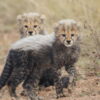
One cheetah female named – Atsile One chetaah female named – Q
For many years, the reserve has been home to an incredible story of speed, survival, and adaptation, the story of the cheetahs. Guests and guides alike have shared countless unforgettable moments watching these elegant predators glide silently through the tall grass or explode into breathtaking bursts of speed during a hunt. Each generation of cheetahs that has roamed our plains has added to this legacy, deepening our understanding of one of Africa’s most iconic species.
Recently, that legacy grew even stronger. The reserve proudly welcomed a new group of cheetahs, marking another milestone in our ongoing contribution to the Cheetah Metapopulation initiative, an initiative dedicated to ensuring the long-term survival of cheetahs across Africa.
For the very first time, we now have two female cheetahs residing on the reserve, a significant addition that not only diversifies our population but also holds great promise for future breeding success. It is over a month since their release, the new arrivals have settled in beautifully, producing excellent sightings almost daily.
They have adapted quickly to the terrain, showing both confidence and curiosity as they explore the reserve’s open plains and thickets. Guests have been delighted to watch them in action, stalking silently, scanning from termite mounds, and displaying the agility and precision that make cheetahs the ultimate specialists among predators.
This month, the coalition of males reminded us why they are such extraordinary hunters. We were lucky to witness them feeding on a blesbok, a testament to their teamwork and skill. The males have been targeting blesbok regularly and have shown impressive success, a sign of their strength and coordination as a hunting unit. Their lean, muscular builds and synchronized movements make them a fascinating team to follow on game drives.
Meanwhile, the young 22-month-old female has been equally impressive on her own. She has taken to hunting impalas with growing confidence, refining her technique with every attempt. Watching her crouch low, blend with the golden grass, and then burst forward with astonishing acceleration is both thrilling and humbling, a vivid reminder of nature’s perfect design for survival.
The coalition was seen running restlessly through the damp grass, sniffing the ground and scent-marking tree trunks with great intensity. It soon became clear that one of the females had left behind a trail, an invitation for courtship. The males followed the scent eagerly, their calls echoing through the still morning air, a haunting and thrilling sound that carried across the plains.
What unfolded next was a fascinating display of instinct and persistence. The males were clearly determined, but finding the female proved to be a true challenge. The scent had grown faint in places, and shifting winds made tracking even more difficult. For the guests, it was a rare chance to witness the courtship behavior of cheetahs, something few people ever get to see. Every sniff, every call, every flick of a tail told part of a wild and ancient story — one of nature’s timeless rituals.
Unbeknownst to the males, the clever female had already moved far North, into the Blom area of the reserve. Her movements were deliberate, possibly testing the males’ determination or simply ensuring she found the perfect secluded spot away from competing predators. It was as though she was writing her own chapter in this evolving saga, keeping the males guessing.
Days later, signs of renewed activity suggested that the males were closing the gap. Tracks and scent marks indicated that they had finally crossed into her range. The air of anticipation among the guiding team was electric. Moments like these remind us that the bush is alive with stories unfolding quietly, often hidden from plain sight, until we are privileged enough to witness them.
The ongoing story of the cheetahs is one of persistence, adaptation, and hope. Every successful hunt, every birth, every track in the sand adds another piece to a much larger conservation puzzle. As we continue to monitor and protect these remarkable animals, we celebrate not only their beauty and speed but also their resilience.
For guests and guides alike, the sight of cheetahs sprinting through the reserve or lazing under an acacia tree remains one of the purest and most inspiring moments in the wild, a true symbol of Africa’s heart and spirit.


If you’ve ever seen a herd of zebras on the plains, you’ve probably noticed how often they twitch, flick their tails, and shake their skin, almost as if they can’t stand still for more than a few seconds. This constant twitching isn’t restlessness it’s an incredible survival adaptation. Something my guests had to experience the zebra doing while out on a safari with me.
It’s almost impossible to spend time with a herd of zebras and not notice the constant rippling of their skin. From a distance, the movement looks subtle, almost like a shimmer passing across their black and white coats. But sit closer for a while and you’ll see just how relentless it is. A flick of the ear, a shiver down the shoulder, a ripple across the flank, an unending dance against an equally persistent adversary, flies!
Zebra skin is equipped with a specialized sheet of muscle, the panniculus carnosus, which lies just beneath the surface. This muscle contracts in response to the lightest touch, a largely automatic reflex.
When a fly lands, the skin ripples to dislodge it before it pierces through. Horses and cattle share this ability, but zebras seem to utilize it almost continuously, living as they do in regions across Africa where tsetse flies, mosquitoes, and horseflies are abundant. Add to that the whip of a tail and the stamping of hooves, and you begin to appreciate just how much their daily rhythm is devoted to keeping insects at bay.
Flies target zebras because they are after blood. The flies use a mix of cues to find a host: the warmth radiating from the body, the carbon dioxide released in every breath, and subtle odours from the skin and coat. Large, moving animals in open habitats are easy to detect, and in a herd, there are multiple targets close together, making zebras especially appealing. The stripes help reduce landings, but they don’t stop the insects from trying.
The black and white coat plays a surprisingly important role in this story. Research has shown that biting flies are drawn to large, dark, uniform surfaces. The alternating stripes appear to disrupt the polarized light that insects use to orient themselves. In effect, the stripes make it harder for flies to recognize a zebra as a landing site.
Studies comparing zebras to uniformly colored horses in the same habitat found that horses are bitten far more frequently by biting flies than zebras are. Stripes don’t eliminate the problem altogether – hence the constant twitching – but they make zebras less appealing to an insect that relies heavily on vision. There’s also a thermoregulatory angle.
Dark stripes absorb more solar radiation than light ones, creating slight temperature gradients across the skin. This difference sets up small-scale convection currents, which may help lift heat away from the body. The effect is subtle and still debated in scientific circles, but it adds another possible layer of evolutionary advantage to the zebra’s coat. In an environment where shade is often scarce and temperatures soar, even minor cooling mechanisms are crucial.
While twitching is primarily an involuntary response to insect irritation, there is some evidence that animals, including zebras, also use body shakes and shivers in moments of release after stress.
Ethologists studying mammals often note a “shake-off” after a chase, fight, or other heightened event. In these cases, the movement serves a neurological reset, helping the body transition from a state of high alert back to calm. For zebras, the line between insect defense and stress release may blur, but the constant twitching itself is more mechanical than emotional. So, the restless flickering of zebra coats is far more than a nervous habit.
It’s a finely tuned combination of muscle reflexes, patterning, and physics, a way to endure the irritation of flies and the extremes of African heat, while perhaps even providing an outlet after stressful encounters. Next time you sit with a herd and notice the shimmer moving across their flanks, it’s worth remembering that what you’re seeing is a quiet but essential survival strategy, honed over millennia.
Venturing out on a hot summer afternoon, it is not uncommon to see many of the animals residing in the shade of a tall Wild Seringa tree or hiding in the brush under a Karee tree. The air shimmers with heat, and a giraffe stands motionless against the glare. The giraffe barely flicks an ear, unbothered by the temperature that sends most of us seeking shade. Giraffes are over five meters tall, its entire body is exposed to the blazing Mabula sun, yet it shows no sign of strain.
I couldn’t help but wonder how comfortable it was. It doesn’t have large ears to flap like an elephant; it cannot pant like a dog and does not roll around in mud like a warthog. How does it cope? For years, giraffe patches have been admired for their beauty and their camouflage. Their distinctive patterns break up the body’s outline among thorn trees and acacias, helping them blend into the dappled light.
The Unique Vasculature of Giraffe Patches,” uncovered an intricate thermal control system beneath the giraffe’s skin, each patch is not just pigment but a highly specialized radiator. Each dark patch is supplied by a single, central artery that radiates outward like the spokes of a bicycle wheel, forming an angiosome, or vascular territory.
Surrounding the lighter areas of skin are large veins linked by special arteriovenous (A-V) shunts, tiny valves that can redirect blood flow. These shunts are much larger and more numerous than in any other known mammal, suggesting an incredible ability to either release or conserve heat depending on the conditions.
In simpler terms, every giraffe patch is a self-contained cooling system, an individual thermal window that can be “opened” or “closed.” When the day heats up, the giraffe can increase blood flow to these dark patches, radiating excess heat into the surrounding air by opening the shunts. When the temperature drops, those same shunts can close, conserving warmth deep within the body. It’s an elegant and efficient solution to the constant challenge of thermoregulation in open savanna habitats.
What’s more, this unique vascular design seems to be exclusive to giraffes. patterned mammals, like zebras and African wild dogs have none. For those species, stripes and spots are primarily for camouflage or social signaling, not for cooling. The giraffe stands alone as a masterpiece of functional evolution, where patterns and physiology are inseparable.
Here at Mabula, we always speak about the fact that everything happens for a reason out in the bush. Every curve, color, and call in the bush has a reason behind it. The delicate ear flick of a lion disperses flies; the pale underside of a kudu’s tale reflects light to confuse predators and allows the younger individuals to see them running through the long grass. The giraffe’s patches are no different and yet another reminder that nature rarely designs for beauty alone, though beauty is often the by-product.
Next time you see a giraffe standing quietly in the heat, I hope you no longer see just a tall, gentle browser blending into the landscape. I hope you see an animal equipped with one of the most remarkable natural cooling systems on earth. Beneath that patterned coat lies a network of vessels, valves, and nerves that make survival in this harsh environment possible.
But for me, the fascination lies in the poetry of it. Something is humbling about knowing that the same pattern we marvel at for its beauty is, in fact, an expression of pure functionality. The giraffe’s stillness beneath the sun isn’t laziness or indifference; it’s confidence in an evolutionary design millions of years in the making.


Why We Pause for a Sundowner
As the sun begins its slow descent, we pause, not just for a drink, but to truly be part of the bush. The air cools, the birds call their final songs, and the gentle rustle of leaves reminds us that we are guests in a world that moves at its own pace. This is your moment to breathe, stretch your legs, and let the sights and sounds of the wild sink in.
This is also a special time for wildlife observation. Many animals are most active around sunset, and a quiet pause allows you to spot them in their natural behavior. The golden light of the setting sun creates perfect conditions for photography, making the moment even more memorable.
Finally, a sundowner is about sharing the experience. Whether with fellow guests or guides, it’s a time for stories, laughter, and reflection. Slowing down in this way encourages mindfulness, helping you fully appreciate the beauty and rhythm of the African bush.
From Isaiah Banda & Mabula family.
Safari Greetings.